
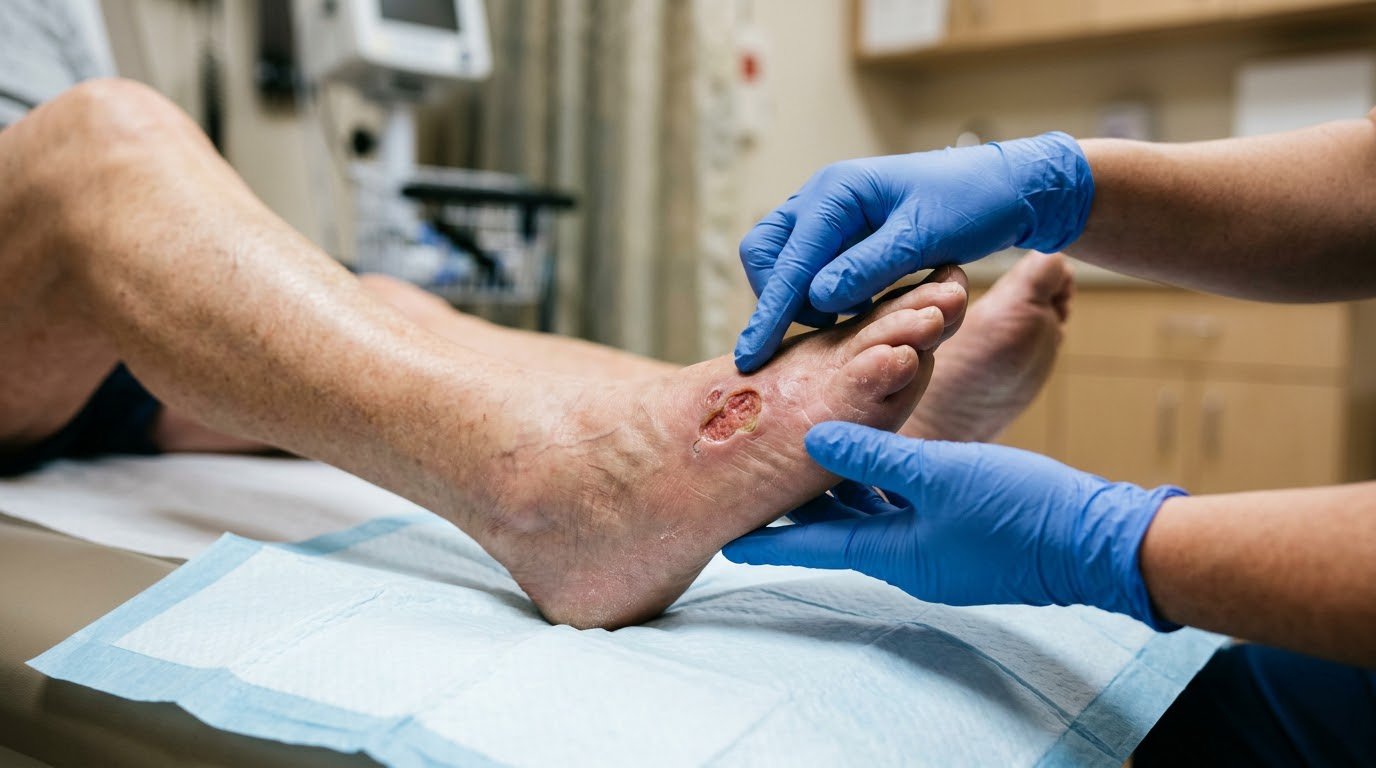
What Is a Diabetic Foot Ulcer?
A diabetic foot ulcer is an open wound that typically develops on the bottom or sides of the foot in people with diabetes. These wounds occur because diabetes can reduce blood circulation and damage nerves (neuropathy), making it difficult for the body to sense injuries or fight infections. Even small cuts, blisters, or pressure points can develop into serious wounds that are slow to heal without proper care.
Why Diabetic Foot Ulcers Are Serious
Without appropriate treatment, diabetic foot ulcers can lead to:
• Infection (cellulitis or osteomyelitis)
• Hospitalization
• Tissue death (gangrene)
• Amputation
According to the CDC, about 1 in 4 Medicare beneficiaries with diabetes develop foot ulcers, and early intervention is critical to preventing complications.
When to Seek Medical Care
Seek immediate care if you notice:
• An open sore on your foot that doesn’t improve after 2-4 weeks
• Signs of infection (redness, warmth, drainage, odor)
• Increasing pain or swelling
• Discoloration or darkening of the wound area
• Fever or chills
Early evaluation by a wound care specialist can significantly improve healing outcomes.
Treatment Options for Non-Healing Diabetic Foot Ulcers
When standard wound care (cleaning, dressing changes, infection management) is not sufficient,
specialized wound care providers may recommend advanced therapies. These may include:
Standard Advanced Therapies
• Advanced wound dressings (antimicrobial, moisture-wicking)
• Negative pressure wound therapy (NPWT)
• Debridement (removal of dead tissue)
• Infection management and antibiotic therapy
• Pressure offloading (special footwear or devices)
• Vascular assessment and management
Biologic Wound Treatments
Biologic skin substitutes and tissue grafts (such as amniotic tissue allografts) may be considered
when standard therapies are not achieving adequate healing. These materials are designed to:
• Create an optimal environment for tissue regeneration
• Reduce inflammation
• Promote new blood vessel formation
• Support the body’s natural healing process
Biologic treatments are typically recommended when:
• The wound has not improved after 4 weeks of standard care
• The wound is at risk of serious complications
• A physician determines they are medically appropriate
How Treatment is Determined
Your wound care provider will evaluate your specific situation, including:
• Wound size, depth, and location
• Presence of infection
• Blood circulation and nerve function
• Overall health and medical history
• Your treatment goals
Based on this evaluation, a personalized treatment plan will be recommended.
Medicare Part B and Advanced Wound Care: What You Should Know
Medicare Part B may cover certain advanced wound care treatments, including biologic grafts,
when a qualified healthcare provider determines they are medically necessary.
Factors That Affect Medicare Coverage
Whether Medicare Part B covers your treatment depends on multiple factors:
• Medical Necessity: A licensed physician must document that advanced treatment is medically necessary
• Wound Characteristics: The wound must meet specific criteria (e.g., not healing after 4+ weeks of standard care)
• Proper Documentation: The provider must submit appropriate medical documentation to Medicare
• Eligibility: You must have active Medicare Part B coverage
• Local Coverage Decisions (LCDs): Some treatments may have specific coverage rules in your state
Out-of-Pocket Costs
If Medicare Part B covers your treatment, your costs typically include:
• Medicare Part B deductible (if not yet met)
• Medicare Part B coinsurance (typically 20% of approved amount)
• Any non-covered services or supplies
Your actual out-of-pocket costs depend on your specific Medicare coverage and the treatments provided.
How to Determine Your Coverage
The only way to know if you qualify for Medicare-covered treatment is to:
1. Consult with a qualified wound care provider
2. Have your wound evaluated
3. Have the provider submit your case to Medicare for review
4. Receive a coverage determination from Medicare
We can help connect you with providers who can evaluate your eligibility.
What to Do If You Have a Non-Healing Diabetic Foot Ulcer
If your diabetic foot ulcer has not improved after 2-4 weeks of standard treatment, advanced wound care may be an option worth exploring.
Step 1: Schedule an Evaluation
Contact a qualified wound care provider or your primary care physician to request a wound evaluation.
Be prepared to discuss:
• How long the wound has been present
• Treatments you’ve already tried
• Any signs of infection
• Your medical history and current medications
Step 2: Get a Professional Assessment
During the evaluation, the provider will:
• Examine your wound
• Review your medical history
• Assess your circulation and nerve function
• Determine if advanced treatments may be appropriate
• Discuss treatment options and expected outcomes
Step 3: Check Your Medicare Eligibility
If advanced treatment is recommended, the provider will:
• Verify your Medicare Part B coverage
• Submit your case to Medicare for coverage determination
• Explain your potential out-of-pocket costs
• Answer your questions about the treatment plan
Step 4: Begin Treatment (If Approved)
If Medicare approves your case, treatment can typically begin within 1-2 weeks.
Treatment may be provided at a clinic or, in some cases, at your home.
