
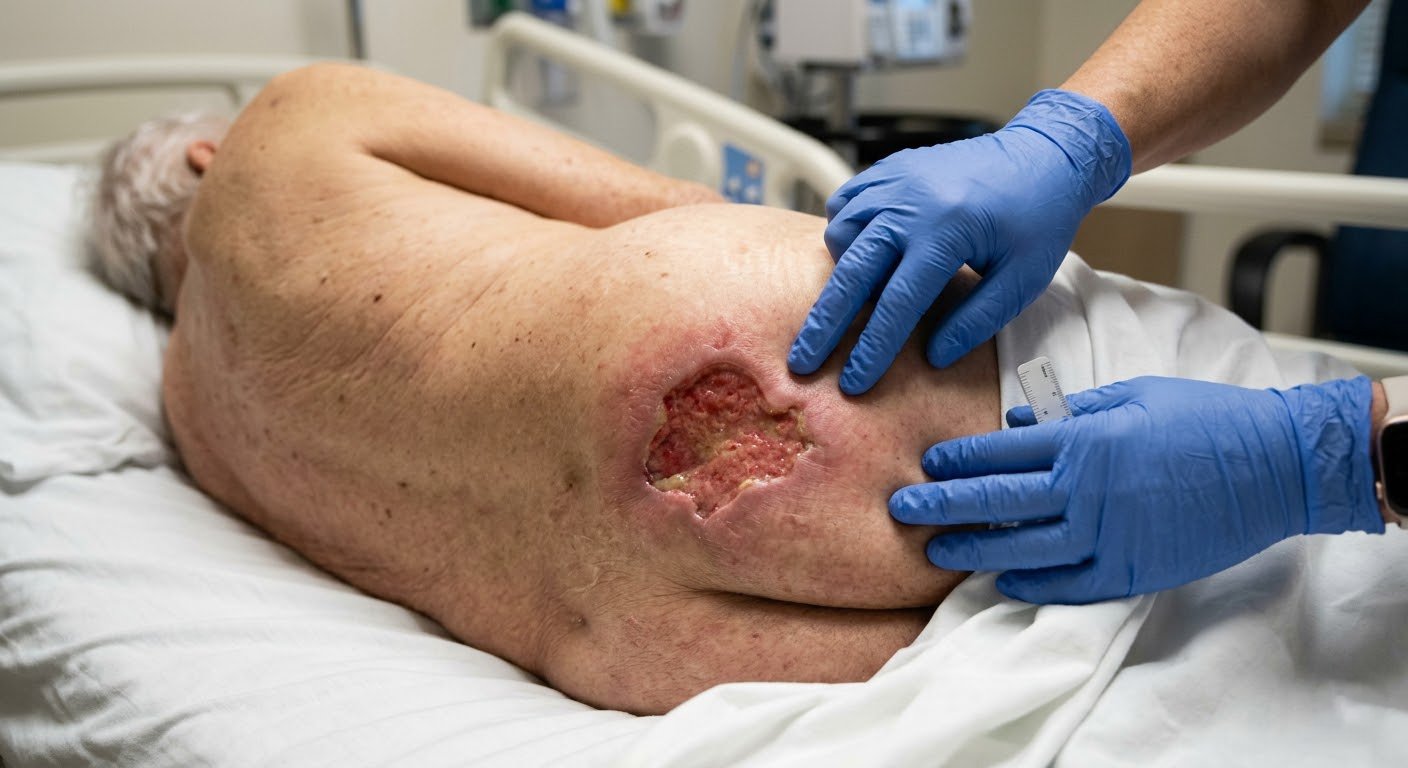
What Are Pressure Ulcers (Bed Sores)?
A pressure ulcer, also known as a bed sore or decubitus ulcer, is a wound that develops when prolonged pressure damages the skin and underlying tissue.
These wounds are common in:
• Patients with limited mobility
• People who spend extended time in bed
• Wheelchair users
• Older adults with certain medical conditions
Pressure ulcers typically form on areas where bone is close to the skin:
• Lower back (sacrum)
• Hips
• Heels
• Elbows
• Shoulder blades
Why Pressure Ulcers Develop
Pressure ulcers occur when:
• Continuous pressure reduces blood flow to an area of skin
• The skin and underlying tissue don’t receive enough oxygen and nutrients
• Tissue begins to break down and die
• An open wound forms
Risk factors include:
• Immobility or limited movement
• Incontinence
• Poor nutrition
• Advanced age
• Certain medical conditions (diabetes, spinal cord injury)
Stages of Pressure Ulcers
Pressure ulcers are classified into stages based on severity:
Stage 1: Skin is intact but red and may not blanch (turn white) when pressed
Stage 2: Partial skin loss with blistering or shallow open wound
Stage 3: Full-thickness skin loss with deeper tissue damage
Stage 4: Severe tissue damage affecting muscle, bone, or supporting structures
Unstageable: Wound covered with dead tissue (eschar) that prevents staging
Advanced-stage pressure ulcers (Stage 3-4) require specialized wound care treatment.
Complications of Untreated Pressure Ulcers
Without proper treatment, pressure ulcers can lead to:
• Infection (cellulitis, osteomyelitis, sepsis)
• Hospitalization
• Extended recovery times
• Reduced quality of life
• Serious health complications
Early intervention is critical to preventing these complications.
Treatment Options for Non-Healing Pressure Ulcers
Treatment for pressure ulcers depends on the stage and severity of the wound.
A wound care specialist will develop a personalized treatment plan.
Prevention and Early Care
For Stage 1-2 pressure ulcers:
• Regular position changes (every 2 hours)
• Pressure-relieving devices (special mattresses, cushions)
• Skin care and moisture management
• Nutrition support
• Treatment of underlying conditions
Advanced Wound Care (Stage 3-4)
For advanced-stage pressure ulcers that are not healing with standard care,
specialized treatments may include:
• Debridement: Removal of dead or infected tissue to promote healing
• Advanced wound dressings: Antimicrobial, moisture-wicking, or specialized dressings
• Negative pressure wound therapy (NPWT): Vacuum-assisted closure to promote healing
• Infection management: Antibiotics and infection control
• Biologic treatments: Tissue grafts or biologic materials to support tissue regeneration
Biologic Wound Treatments for Pressure Ulcers
Biologic materials (such as amniotic tissue allografts) may be recommended when:
• The pressure ulcer is Stage 3 or 4
• Standard treatments have not achieved adequate healing
• The wound is at risk of serious complications
• A physician determines they are medically appropriate
These materials are designed to:
• Reduce inflammation and infection risk
• Promote tissue regeneration
• Support the body’s natural healing process
• Reduce hospitalization and complications
Surgical Options
For severe pressure ulcers, surgical intervention may be considered, including:
• Surgical debridement (removal of dead tissue)
• Flap procedures (tissue transfer from another area)
• Reconstruction surgery
Your wound care team will discuss whether surgery is appropriate for your situation.
Medicare Part B Coverage for Pressure Ulcer Treatment
Medicare Part B may cover certain advanced wound care treatments for pressure ulcers,
including biologic grafts, when a qualified healthcare provider determines they are medically necessary.
What Medicare Part B May Cover
Potential coverage includes:
• Evaluation and management by a wound care specialist
• Advanced wound dressings
• Negative pressure wound therapy (NPWT)
• Biologic wound coverings such as human tissue grafts (when medically necessary)
• Infection management and antibiotic therapy
• Related supplies and equipment
Eligibility Requirements
To qualify for Medicare coverage, you typically must have:
• Active Medicare Part B coverage
• A pressure ulcer that meets Medicare’s medical necessity criteria
• Documentation from a qualified healthcare provider
• Evidence that standard treatments have been tried or are not appropriate
How Coverage is Determined
Your healthcare provider will:
-
Evaluate your pressure ulcer
-
Review your medical history and treatment history
-
Determine if advanced treatment is medically necessary
-
Submit documentation to Medicare
-
Receive a coverage determination from Medicare
Your Out-of-Pocket Costs
If Medicare approves your treatment, your costs may include:
• The Medicare Part B deductible (if it has not yet been met for the year)
• Medicare Part B coinsurance (typically about 20% of the Medicare-approved amount)
• Any services or supplies not covered by Medicare
Actual costs depend on your specific Medicare coverage and the treatments determined by your healthcare provider.
When to Seek Professional Wound Care for Pressure Ulcers
Seek immediate professional care if you have:
• A pressure ulcer that is not improving after 1-2 weeks
• Signs of infection (redness, warmth, drainage, odor, fever)
• Increasing pain or swelling
• A Stage 3 or 4 pressure ulcer
• Multiple pressure ulcers
Early evaluation by a wound care specialist can significantly improve outcomes and prevent complications.
