
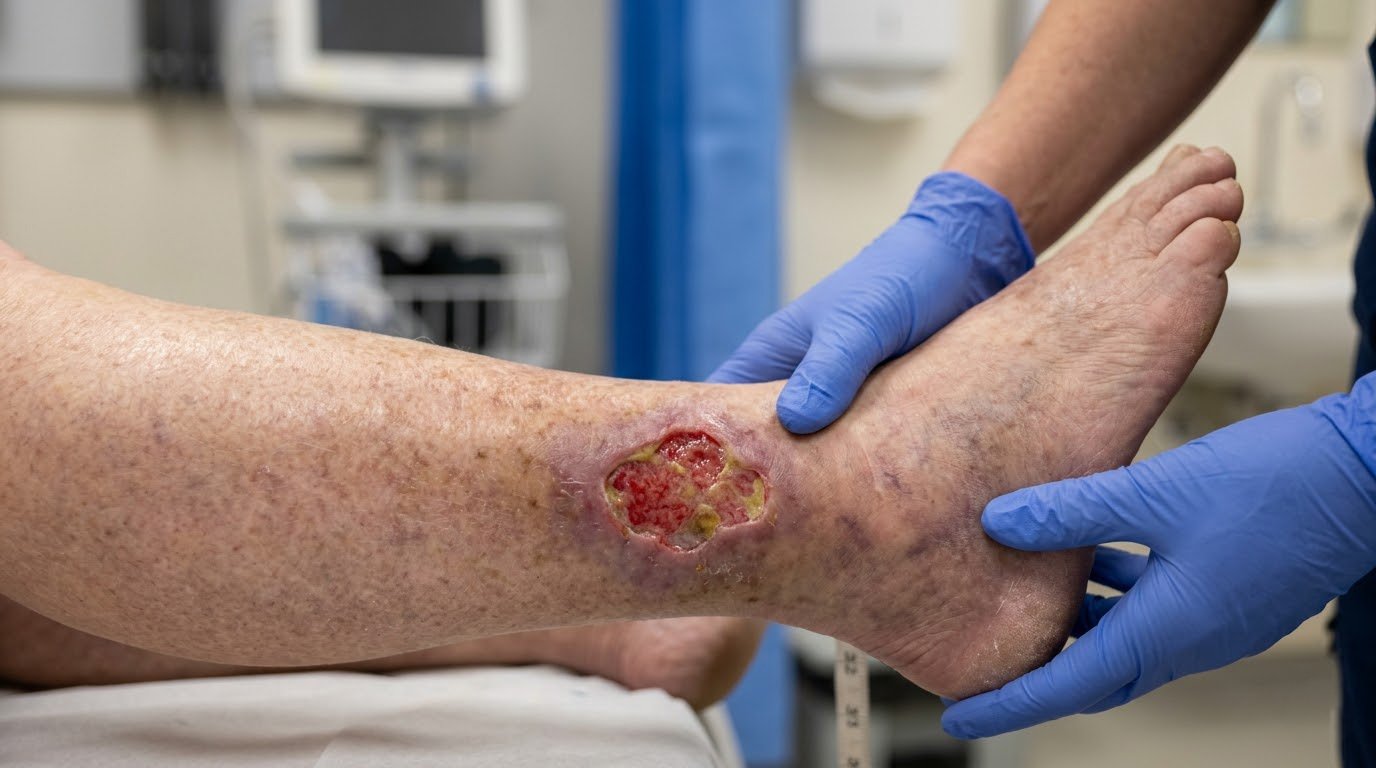
What Are Venous Leg Ulcers?
A venous leg ulcer is a wound that develops when blood circulation in the veins of the leg becomes impaired.
When veins don’t work properly, blood backs up in the legs, causing pressure to build in the veins.
This increased pressure damages the skin and underlying tissue, leading to open sores.
Venous leg ulcers typically appear on:
• The lower leg (between knee and ankle)
• The inner ankle
• The calf
Why Venous Leg Ulcers Develop
Venous leg ulcers occur when:
• Veins in the leg don’t pump blood back to the heart efficiently
• Blood pools in the legs (venous stasis)
• Increased pressure damages the skin and tissue
• An open wound forms
Risk factors include:
• History of deep vein thrombosis (DVT) or blood clots
• Varicose veins
• Leg trauma or injury
• Obesity
• Advanced age
• Prolonged standing or sitting
• Pregnancy history
Symptoms of Venous Leg Ulcers
Common symptoms include:
• A shallow, open wound on the lower leg or ankle
• Swelling in the leg or ankle (especially at the end of the day)
• Aching, heaviness, or pain in the legs
• Skin discoloration or darkening around the wound
• Itching or burning sensation
• Slow healing over weeks or months
• Wound that repeatedly reopens
Why Venous Leg Ulcers Are Serious
Venous leg ulcers are one of the most common types of chronic wounds in older adults.
Without proper treatment, they can:
• Persist for months or years
• Become infected
• Significantly impact quality of life and mobility
• Lead to hospitalization
• Require amputation in severe cases
Early professional evaluation is important to prevent complications.
Treatment Options for Non-Healing Venous Leg Ulcers
Treatment for venous leg ulcers focuses on improving blood circulation and supporting wound healing.
A wound care specialist will develop a personalized treatment plan based on your specific situation.
Compression Therapy (First-Line Treatment)
Compression is the foundation of venous ulcer treatment:
• Compression stockings or wraps reduce swelling and improve circulation
• Graduated compression (strongest at ankle, decreasing up the leg)
• Typically worn daily to support healing
• Often combined with other treatments
Wound Care Management
Standard wound care includes:
• Regular wound cleaning and dressing changes
• Debridement (removal of dead tissue)
• Infection management and antibiotic therapy
• Moisture management with appropriate dressings
• Leg elevation and activity modification
Advanced Treatments for Non-Healing Venous Ulcers
When standard treatments (compression + wound care) are not achieving adequate healing after 90+ days,
advanced therapies may be recommended:
• Biologic wound treatments: Tissue grafts or biologic materials to support tissue regeneration
• Negative pressure wound therapy (NPWT): Vacuum-assisted closure to promote healing
• Growth factor therapies: Medications that stimulate tissue growth
• Skin substitutes: Engineered skin products to support healing
These advanced treatments are typically recommended when:
• The ulcer has not improved after 90+ days of standard care
• The wound is at risk of serious complications
• A physician determines they are medically appropriate
Vascular Interventions
In some cases, vascular procedures may be considered:
• Ultrasound to assess vein function
• Endovenous ablation (closing problematic veins)
• Vein stripping or ligation
• Angioplasty or stent placement
Your healthcare team will determine if vascular intervention is appropriate for your situation.
Surgical Options
For severe or non-healing venous ulcers, surgical options may include:
• Skin grafting
• Flap procedures
• Reconstruction surgery
Surgery is typically considered only after conservative and advanced treatments have been tried.
Medicare Part B Coverage for Venous Leg Ulcer Treatment
Medicare Part B may cover certain advanced wound care treatments for venous leg ulcers,
including biologic grafts, when a qualified healthcare provider determines they are medically necessary.
What Medicare Part B May Cover
Potential coverage includes:
• Evaluation and management by a wound care specialist
• Compression therapy and supplies
• Advanced wound dressings
• Negative pressure wound therapy (NPWT)
• Biologic wound coverings such as human tissue grafts when clinically appropriate
• Infection management and antibiotic therapy
• Related supplies and equipment
Coverage Criteria
To qualify for Medicare coverage, you typically must have:
• Active Medicare Part B coverage
• A venous leg ulcer that has not healed after 90+ days of documented treatment
• Evidence that standard treatments (compression + wound care) have been tried
• Documentation from a qualified healthcare provider
• Medical necessity determination
How to Check Your Eligibility
The only way to know if you qualify for Medicare-covered treatment is to:
-
Consult with a qualified wound care provider
-
Have your wound evaluated
-
Have the provider submit your case to Medicare for review
-
Receive a coverage determination from Medicare
This process typically takes 5-7 business days.
Your Out-of-Pocket Costs
If Medicare approves your treatment, your costs may include:
• The Medicare Part B deductible (if it has not yet been met for the year)
• Medicare Part B coinsurance (typically about 20% of the Medicare-approved amount)
• Any services or supplies not covered by Medicare
Actual costs depend on your specific Medicare coverage and the treatments determined by your healthcare provider.
When to Seek Professional Care for Venous Leg Ulcers
Seek professional evaluation if you have:
• A leg wound that has not improved after 2-4 weeks
• Swelling, pain, or discoloration in your legs
• Signs of infection (redness, warmth, drainage, odor)
• A history of blood clots or vein problems
• Varicose veins with skin changes
Early professional evaluation can prevent complications and improve healing outcomes.
